Saint-Emilion & Pomerol: The Timeless Soul of Bordeaux’s Right Bank
As you crest the hills of the Dordogne Valley, the golden limestone tableland of Saint-Emilion emerges like a dream from a sea of emerald vines. This is a landscape where time seems to hold its breath, balancing the weight of medieval history with the vibrant energy of a world-class wine capital. To visit Saint-Émilion and its neighbor, Pomerol, is to move beyond the grand formalities of the Médoc and enter a world of intimacy, where the relationship between the vigneron and the soil is etched into every stone and felt in every glass.
The Terroir: A Mosaic of Flavors
What makes Saint-Émilion fascinating for any visitor is the diversity of its soils, which creates a vast "palette" of wine styles:
The Limestone Plateau: Surrounding the village, this rock provides the wines with a distinct freshness, minerality, and incredible longevity.
The Clay-Gravel Slopes: Towards the border of Pomerol, these soils produce richer, more powerful, and opulent wines (like the legendary Château Figeac or Cheval Blanc).
The Sandy Foot-slopes: Here, the wines are lighter, more floral, and ready to be enjoyed younger, perfect for a casual lunch.
The Grape: The Reign of Merlot
While the Left Bank worships Cabernet, Saint-Émilion is the kingdom of Merlot.
Merlot brings the "flesh"—silky textures, plum, and chocolate notes.
Cabernet Franc is the secret weapon here, added for its aromatic complexity, bringing scents of violets, wild herbs, and structure.
A Journey Through Time
A visit to Saint-Émilion is a multi-sensory experience:
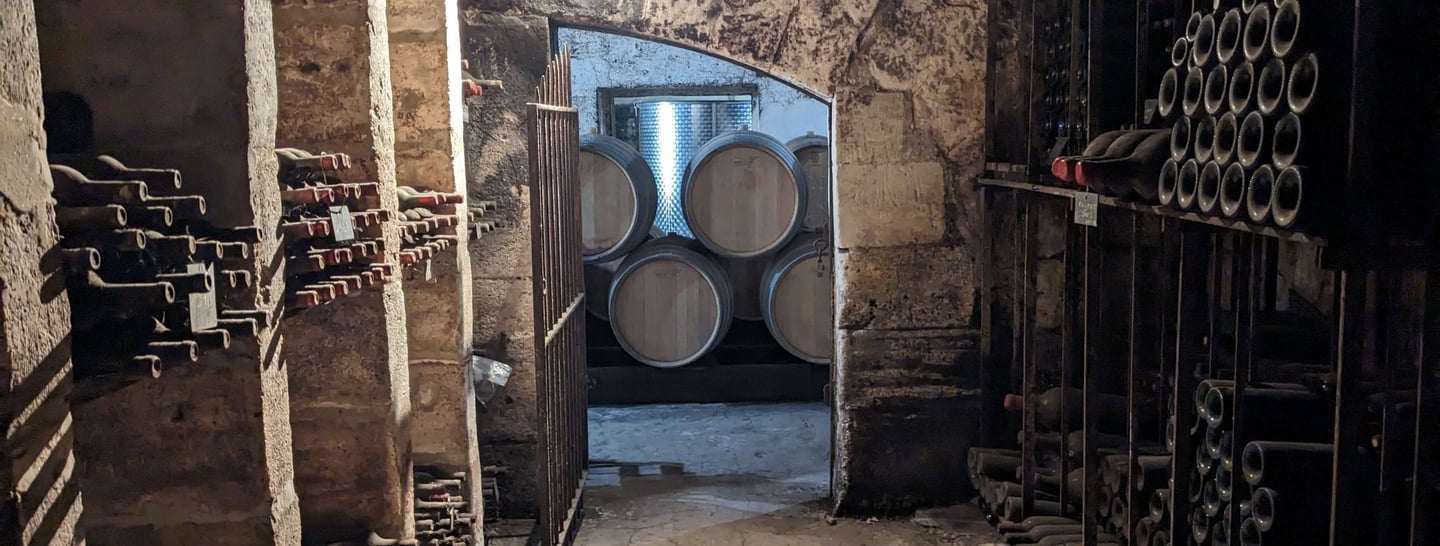
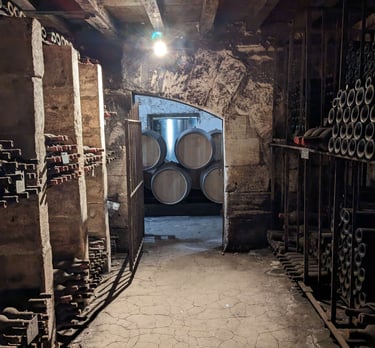
The Underground World: Beneath your feet lies a labyrinth of over 200 kilometers of galleries. These former limestone quarries now serve as the world's most perfect natural wine cellars, maintaining a constant 12°C/55°F.
The 1855 Alternative: Unlike Médoc, Saint-Émilion updates its classification every 10 years. This creates a dynamic, competitive spirit among the Châteaux, ensuring that a visit today offers the absolute cutting edge of winemaking technology.
The Village: Walking through the "Tertres" (steep cobblestone paths), you’ll find artisan wine shops, world-class restaurants, and the iconic Monolithic Church, a subterranean marvel that echoes the region’s deep religious and viticultural roots.
Why It’s a "Must-Visit"
Whether you are exploring the vanguard architecture of the newest cellars (designed by Pritzker-prize winners) or tasting a vintage in a centuries-old family cellar, Saint-Émilion offers an intimacy that the larger estates of the Médoc often lack. It is a place where you can feel the pulse of the earth and the passion of the people in every glass.
Did you know?
Saint-Émilion was the first wine region to be listed as a World Heritage Site by UNESCO as a "cultural landscape," recognizing that the beauty of the hills is as important as the history of the stones.
Pomerol: The Hidden Jewel of the Right Bank
If the Médoc is defined by its grand châteaux and Saint-Émilion by its medieval history, Pomerol is defined by its exclusivity and intimacy. As the smallest of Bordeaux's major appellations, it offers a "boutique" experience unlike anywhere else in the world.
The Essence of Luxury
The Master of Merlot: Pomerol is the spiritual home of Merlot. Here, the grape reaches a level of opulence and "hedonistic" richness that is impossible to replicate elsewhere.
The Magic of Blue Clay: The most prestigious estates sit atop a unique "button" of iron-rich blue clay. This rare soil gives the wines their signature velvet texture and notes of black cherry, chocolate, and truffle.
No Labels, Just Quality: Uniquely, Pomerol is the only major Bordeaux region without an official classification system. There are no "Grand Cru" titles on the labels because the quality of the names—like Petrus, Le Pin, and Lafleur—speaks for itself.
Why You’ll Love It
Rustic Charm: Forget the massive fortresses; here, the "châteaux" are often charming, unassuming country houses and farmsteads nestled among the vines.
The "Garagiste" Spirit: Many producers are small, family-run operations where the winemaking is artisanal and deeply personal.
A Sensory Escape: A walk through Pomerol feels like a private tour of a garden. Its small scale means you can cross the entire appellation in a few minutes, yet every meter of soil tells a different story.
Maps and wine documentations
Let us help you navigate the world-class vineyards and stunning landscapes of Southwest France
Bordeaux Insider
contact@bordeauxinsider.com
+33 617 480 143